No Supplement Facts panel is published for Horsewood. Every amount on this page is advertised on a competing seller page and set against the intake the published research on that ingredient actually used. That distinction runs through everything below.
The direct answer
Advertised on one competing page: Tongkat Ali 1,000 mg, horny goat weed 80 mg, and saw palmetto, wild yam, sarsaparilla, nettle and boron chelate at 20 mg each. No Supplement Facts panel exists to verify that list. Five of the seven sit far below their researched intakes.
Male-enhancement supplements are the product category the FDA most often finds adulterated with undeclared prescription drugs, usually sildenafil or tadalafil. We have no evidence Horsewood is among them. We say it because those drugs combined with nitrates can cause a catastrophic drop in blood pressure, and neither page selling this product mentions nitrates at all. If you take anything for angina or heart disease, speak to a pharmacist before your first capsule.
The full comparison
| Botanical | Advertised (unverified) | Used in research |
|---|---|---|
| Tongkat Ali (Eurycoma longifolia) | 1,000 mg | 200 mg/day standardised water-soluble extract (Tambi 2012) |
| Horny Goat Weed (Epimedium spp.) | 80 mg | Human trials typically use standardised icariin at far higher intakes |
| Saw Palmetto (Serenoa repens) | 20 mg | 320 mg/day standardised liposterolic extract |
| Nettle Leaf (Urtica dioica) | 20 mg | 300–600 mg/day nettle ROOT extract in prostate studies |
| Wild Yam (Dioscorea villosa) | 20 mg | No established human dose for male hormonal endpoints |
| Sarsaparilla (Smilax spp.) | 20 mg | No established human dose for male hormonal endpoints |
| Boron Chelate | 20 mg | 10 mg/day elemental boron (Naghii 2011) |
The extract-ratio question that decides everything
One competing page lists "Tongkat Ali 1000mg" in its ingredient panel and "Tongkat Ali (1000mg equivalent)" in its own FAQ. Those are not the same claim, and the difference is not small.
Botanical extracts are described by ratio. A 100:1 extract means one hundred parts raw herb produced one part extract, so ten milligrams of that powder can legitimately be sold as a "1,000 mg equivalent" of root. Without the ratio, a raw-equivalent figure tells you nothing about how much you are swallowing.
It matters here because the trial that page cites — Tambi and colleagues, 2012 — used 200 mg daily of a specific standardised water-soluble extract. That is the number with evidence behind it. "1,000 mg" is a bigger figure attached to an unspecified material.
The five that fall short
- Saw palmetto 20 mg against 320 mg standardised in research — one sixteenth, for an endpoint (urinary symptoms) that is not what this product is sold for.
- Nettle leaf 20 mg against 300–600 mg of nettle root. Different plant part, different composition, different evidence.
- Horny goat weed 80 mg of unstandardised herb, with the icariin content unstated.
- Wild yam 20 mg — no established human dose for male hormonal endpoints, and diosgenin is not converted to testosterone by the body.
- Sarsaparilla 20 mg — same position, on tradition rather than trials.
Comparing Horsewood bundles
The Horsewood discount is applied by bundle size: $89 for one bottle, $59 each for three, $49 each for six. Three bottles covers a fair 8-to-12-week assessment.
Check Horsewood Bundle PricesOfficial website checkout · 60-day guarantee · confirm the terms before paying
The one that lands, with a caveat
Boron is the best ingredient on this list. The Naghii 2011 study used 10 mg of elemental boron daily and reported reduced SHBG and increased free testosterone after a week. It is a small study, but it is a real result at a stated dose, and the advertised amount is in the right region rather than a fraction of it.
The caveat is the wording. "20 mg boron chelate" is the weight of the chelate compound, not of boron. If it did mean 20 mg of elemental boron, that sits exactly at the adult tolerable upper intake level. Either way it is a question worth putting to the seller in writing.
Every ingredient, examined
1. Tongkat Ali (Eurycoma longifolia) — 1,000 mg advertised Partly
Is Horsewood's 1,000 mg of Tongkat Ali a real dose?
It depends entirely on what the 1,000 mg refers to, and the page advertising it uses two different phrasings. Its ingredient list says "Tongkat Ali 1000mg"; its own FAQ says "Tongkat Ali (1000mg equivalent)". Those are not the same claim.
"Equivalent" signals an extract-ratio conversion. At 100:1, ten milligrams of extract powder can legitimately be described as a 1,000 mg equivalent of raw root. Without the ratio, the number carries no information. It matters here because the trial that page cites — Tambi and colleagues, 2012 — used 200 mg daily of a specific standardised water-soluble extract, not a gram of root powder. A bigger advertised number is not a bigger dose.
Worth knowing: Tongkat Ali has a LiverTox monograph for drug-induced liver injury. Stop and see a doctor if you develop jaundice, dark urine or right-sided abdominal pain. · PubMed — Tambi 2012, Tongkat Ali
2. Horny Goat Weed (Epimedium spp.) — 80 mg advertised Not supported
What does Horny Goat Weed actually do, and is 80 mg enough?
Its active compound icariin is a weak PDE5 inhibitor — the same enzyme family targeted by sildenafil. That is genuinely interesting and it is also the reason this ingredient needs a safety warning rather than a marketing paragraph. At 80 mg of unstandardised herb, the icariin content is unknown.
Most icariin research is preclinical — rat and in-vitro studies, including the two most often cited. The human evidence is thin. What matters practically is the mechanism: anything with PDE5 activity belongs in a conversation about nitrates, because that combination can drop blood pressure dangerously. Neither page selling this product mentions nitrates anywhere.
Worth knowing: PDE5 activity means a theoretical interaction with nitrates and blood pressure medication. Ask a pharmacist before combining. · PubMed — icariin and nitric oxide synthase
3. Saw Palmetto (Serenoa repens) — 20 mg advertised Not supported
Is 20 mg of saw palmetto a useful amount?
No. The saw palmetto research base — largely on prostate symptoms rather than performance — is built almost entirely on 320 mg daily of a standardised liposterolic extract. An advertised 20 mg is one sixteenth of that.
It is worth adding that even at 320 mg the evidence is mixed: the large STEP and CAMUS trials did not find saw palmetto better than placebo for urinary symptoms. So this is an ingredient with a contested evidence base, advertised at a small fraction of the contested dose, in a product sold for performance rather than for the endpoint it was studied on.
Worth knowing: May affect PSA readings. Tell your doctor before a prostate test. · NCCIH — Saw Palmetto
4. Nettle Leaf (Urtica dioica) — 20 mg advertised Not supported
Why does the nettle part matter?
Because the studies are on the root, and the pages advertise the leaf. Nettle root is what has been examined for prostate symptoms and SHBG binding, typically at 300 to 600 mg daily. Nettle leaf is a different plant part with a different composition and a different, mostly unrelated, evidence base.
This is the kind of detail that separates a formula written by someone who read the research from one assembled from a list of familiar names. It is not a safety problem — nettle leaf is a well-tolerated food herb — but the hormone-related claims attached to it on both competing pages belong to the root, at fifteen to thirty times the advertised amount.
Worth knowing: Generally well tolerated. May have mild diuretic effects. · NCCIH — Stinging Nettle
5. Wild Yam (Dioscorea villosa) — 20 mg advertised Not supported
Does wild yam raise testosterone?
No. Wild yam contains diosgenin, which can be converted into steroid hormones in a laboratory but is not converted into testosterone or DHEA by the human body. That chemistry is the origin of a persistent marketing myth.
The conversion requires industrial processing that human metabolism does not perform. Wild yam has a long traditional use and a thin modern evidence base, and there is no established human dose for male hormonal endpoints. Its presence at an advertised 20 mg is best read as a familiar name on an ingredient list rather than an active contribution.
Worth knowing: Generally well tolerated at small amounts. · NCCIH — dietary and herbal supplements
6. Sarsaparilla (Smilax spp.) — 20 mg advertised Not supported
What is sarsaparilla doing in a male formula?
Traditional use, essentially. Sarsaparilla contains plant sterols including sarsasapogenin, and the same misunderstanding that surrounds wild yam attaches to it — plant sterols are not anabolic steroids and the body does not convert them into testosterone.
Historically it was a tonic and a flavouring for root beer. There is no meaningful modern clinical evidence for male hormonal endpoints and no established dose. At an advertised 20 mg it is a name on a list. That is not a criticism of the plant; it is a description of what 20 mg of it can be expected to do.
Worth knowing: Generally well tolerated. Large amounts may cause stomach upset. · NCCIH — dietary and herbal supplements
7. Boron Chelate — 20 mg advertised Partly
Is 20 mg of boron safe, and is it even 20 mg of boron?
Those are two separate questions and the label answers neither. "20 mg boron chelate" is the weight of the chelate compound, not of elemental boron, which would be a fraction of it. If it did mean 20 mg elemental, that sits exactly at the adult tolerable upper intake level.
Boron is the most interesting ingredient here. The Naghii 2011 study used 10 mg of elemental boron daily and reported a rise in free testosterone and a fall in SHBG after a week — a small study, but a real result at a specified dose. That makes boron the one ingredient where the advertised amount is in the right region. It also makes the chelate-versus-elemental ambiguity worth resolving before you take it daily for six months.
Worth knowing: The adult upper limit is 20 mg elemental boron per day. Ask the seller whether the 20 mg is chelate weight or elemental. · NIH ODS — Boron
The arithmetic problem with the published list
Add the advertised amounts together: 1,000 + 80 + 20 + 20 + 20 + 20 + 20 = roughly 1,180 mg in a single capsule. A size 0 capsule holds around 400 to 500 mg of powder, a size 00 around 600 to 800 mg, and even a size 000 — which most people find difficult to swallow — tops out near a gram. Either the capsule is unusually large, or the Tongkat Ali figure is a raw equivalent rather than a weight of powder. The second is far more likely, and it is the same question again.
Cautions and interactions
- Nitrates: the interaction that matters most, both because icariin has PDE5 activity and because of the category's adulteration record.
- Blood pressure medication: additive hypotension is the concern. Ask first.
- Blood thinners: several botanicals here may affect platelet function.
- Liver: Tongkat Ali has a LiverTox entry for drug-induced liver injury.
- PSA testing: saw palmetto may affect readings. Tell your doctor before a prostate test.
- Hormone therapy and hormone-sensitive cancers: avoid without medical advice.
Read how these work together, or see the claim-by-claim benefit rulings.
Questions people ask about this
What are the ingredients in Horsewood?
Seven botanicals: Tongkat Ali, horny goat weed, saw palmetto, nettle, wild yam, sarsaparilla and boron chelate. Advertised amounts appear on one competing page only and cannot be verified against any published Supplement Facts panel.
Is 1,000 mg of Tongkat Ali a lot?
It depends what it is 1,000 mg of. The same page says both '1000mg' and '1000mg equivalent'. A 100:1 extract would make that 10 mg of powder. The cited trial used 200 mg of standardised extract.
Is 20 mg of boron safe?
It depends whether that is chelate weight or elemental boron, which the label does not say. The adult tolerable upper intake level for elemental boron is 20 mg per day.
Does Horsewood contain any prescription drugs?
We have no evidence that it does. We raise the question only because the FDA's tainted sexual-enhancement products database shows this is the category where undeclared sildenafil and tadalafil turn up most often.
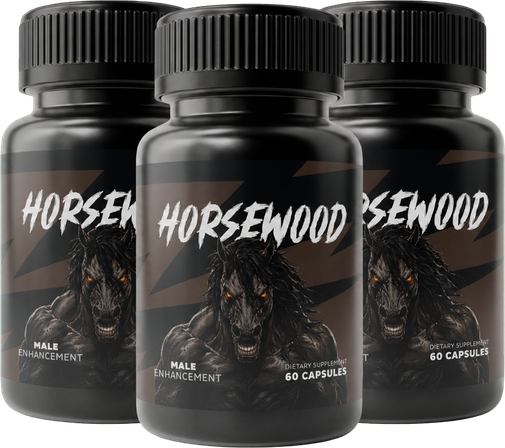
Horsewood Official Website
per bottle on the 6-bottle pack · free US shipping on 3 and 6
Check Current Price 60-day guarantee · official checkout only