Sleep and Testosterone: The Free Intervention
Most daily testosterone release happens during sleep, and restricting sleep to five hours has been shown to lower daytime testosterone
2 September 2026Horsewood
Horsewood® is a dietary supplement formulated for adult men seeking daily support for energy, physical stamina, and overall male vitality. Its capsule formula combines traditional herbal ingredients including Tongkat Ali, Horny Goat Weed, and Nettle Leaf, along with Boron Amino Acid Chelate to complement an active lifestyle.
Horsewood is a dietary supplement marketed in capsule form to support adult male vitality, energy, and physical stamina
Reviewed by Dr. Adaeze Nwachukwu-Byrne, PharmD, BCPS · every figure traced to a published source
| Product | Horsewood — male vitality capsule |
|---|---|
| Format | Capsule, 1 daily |
| Per bottle | 60 on the renders, 30 on one seller page |
| Botanicals named | 7, consistently |
| Supplement Facts panel | None published |
| Amounts published | On one of two pages, unverified |
| Below researched intake | 5 of 7 botanicals |
| Stimulants | None claimed |
| Price | $49–$89 per bottle |
| Guarantee | 60 days, both pages |
| Our rating | 2.6 / 5 |
Male-enhancement supplements are the category the FDA most often finds adulterated with undeclared prescription drugs — usually sildenafil or tadalafil. We have no evidence Horsewood is among them. We are telling you because the combination of those drugs with nitrates can cause a catastrophic drop in blood pressure, and neither page selling this product mentions nitrates anywhere. If you take anything for angina, ask a pharmacist before your first capsule.
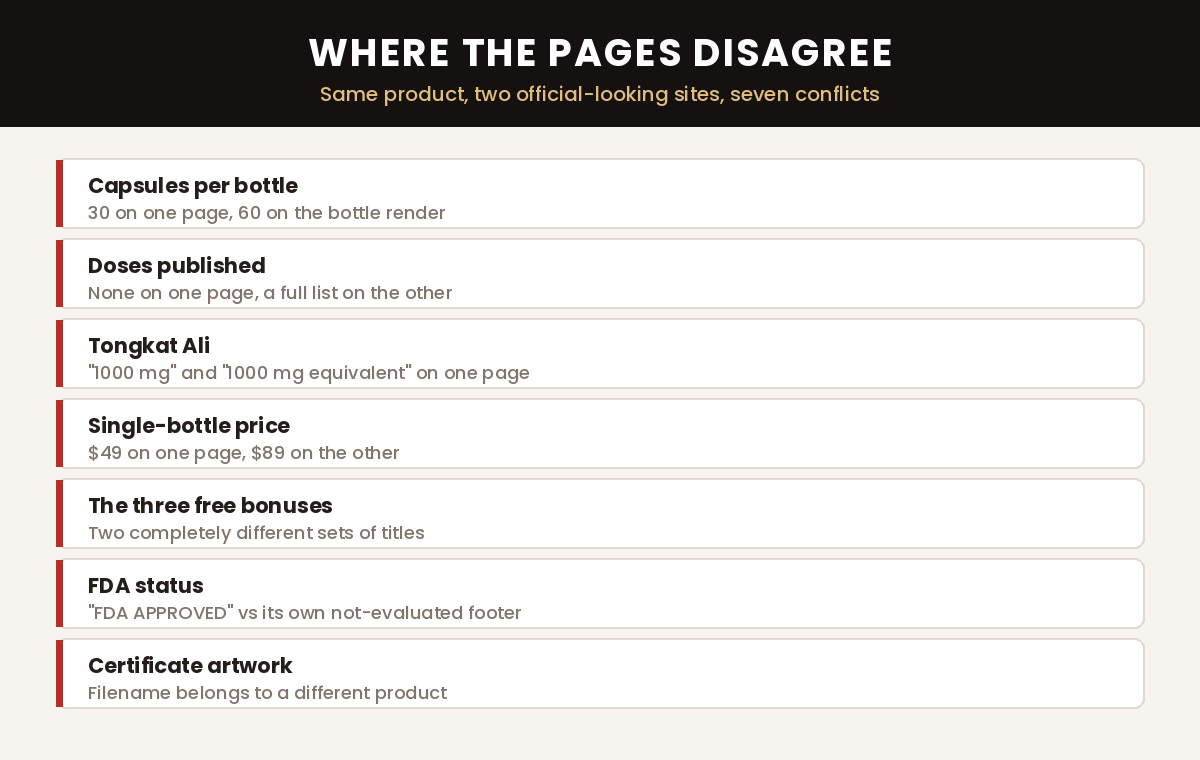
Both present themselves as the Horsewood official website. Both send you to the same affiliate funnel. They do not agree on what is in the bottle, how many capsules it holds, what it costs, or what you get free with it.
One page sells a 30-capsule, 30-day bottle. The bottle renders in the official asset pack read 60 CAPSULES, and the brand's own vitality artwork reads 30 CAPSULES.
One page publishes no amounts at all. The other publishes a full list — 1,000 mg, 80 mg and five lines at 20 mg — with no Supplement Facts panel behind it.
The same page says "Tongkat Ali 1000mg" in its ingredient list and "Tongkat Ali (1000mg equivalent)" in its FAQ. An extract ratio would make those wildly different.
Advertised at $49 a bottle on one page and $89 a bottle on the other, both against a $149 reference price.
One page offers The 7-Day Vitality Reset, The Stallion Kitchen and The Confidence Code. The other offers three entirely different brain-themed guides.
One page runs an "FDA APPROVED" heading and badge, while its own footer states the information has not been evaluated by the FDA.
The "Scientifically Formulated" certificate image on one page is served from a filename belonging to a different product entirely, as is its customer-ratings graphic.
Contradictions between marketing pages are common and usually harmless. These are not, for one reason: if you are on medication, the ingredient list is a safety document. A page that publishes no amounts, or an amount its own FAQ contradicts, is not something you can hand to a pharmacist and get a useful answer from.
The practical fix is the same in every case — ask the seller for a photograph of the actual Supplement Facts panel before you order, and screenshot whichever set of terms you are agreeing to.
Every amount below is advertised on a competing page rather than read from a label, because no label panel is published. Beside each is the intake the published research on that ingredient actually used.
| Botanical | Advertised (unverified) | Intake used in research |
|---|---|---|
| Tongkat Ali (Eurycoma longifolia) | 1,000 mg | 200 mg/day standardised water-soluble extract (Tambi 2012) |
| Horny Goat Weed (Epimedium spp.) | 80 mg | Human trials typically use standardised icariin at far higher intakes |
| Saw Palmetto (Serenoa repens) | 20 mg | 320 mg/day standardised liposterolic extract |
| Nettle Leaf (Urtica dioica) | 20 mg | 300–600 mg/day nettle ROOT extract in prostate studies |
| Wild Yam (Dioscorea villosa) | 20 mg | No established human dose for male hormonal endpoints |
| Sarsaparilla (Smilax spp.) | 20 mg | No established human dose for male hormonal endpoints |
| Boron Chelate | 20 mg | 10 mg/day elemental boron (Naghii 2011) |
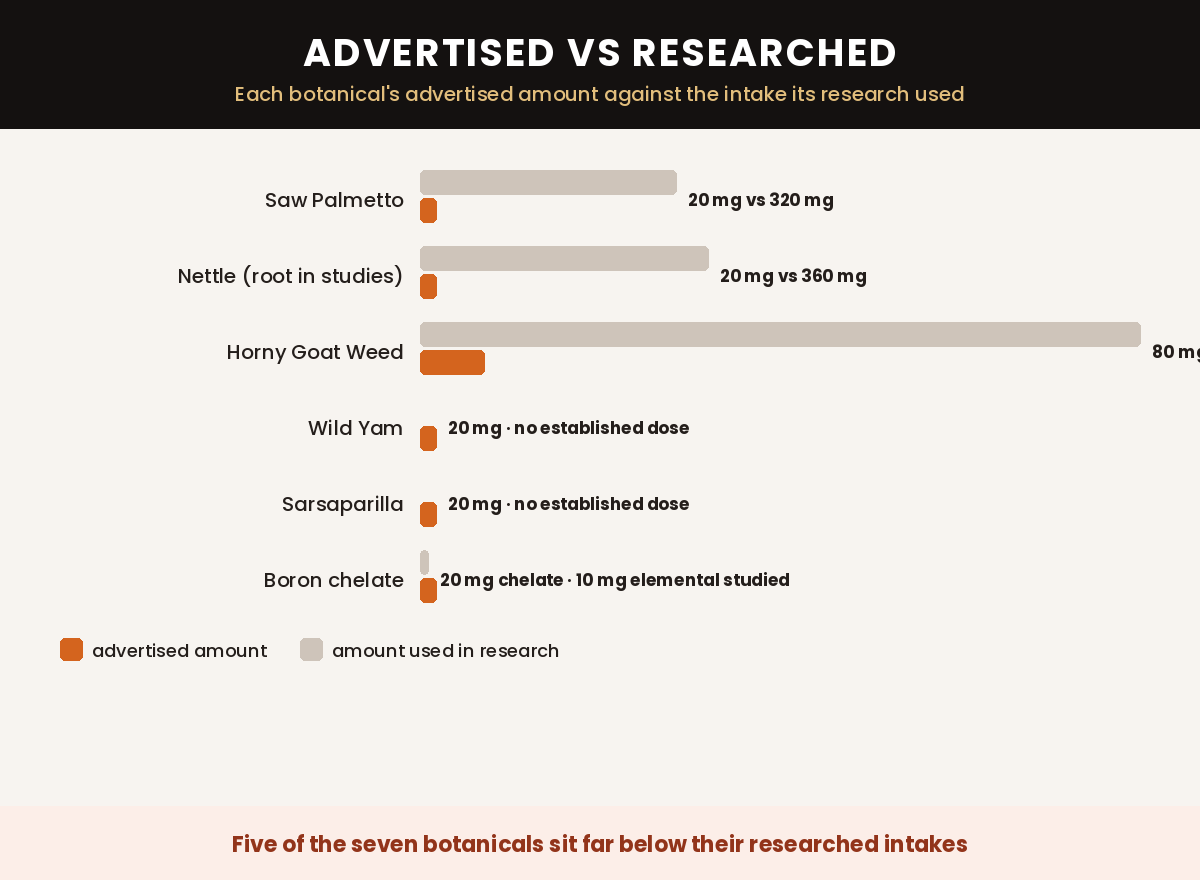
Five of the seven botanicals are advertised far below their researched intakes — saw palmetto at 20 mg against 320, nettle at 20 against 360 and the wrong plant part, horny goat weed at 80 against roughly 900, and wild yam and sarsaparilla at amounts with no established dose at all. Boron is the one in the right region.
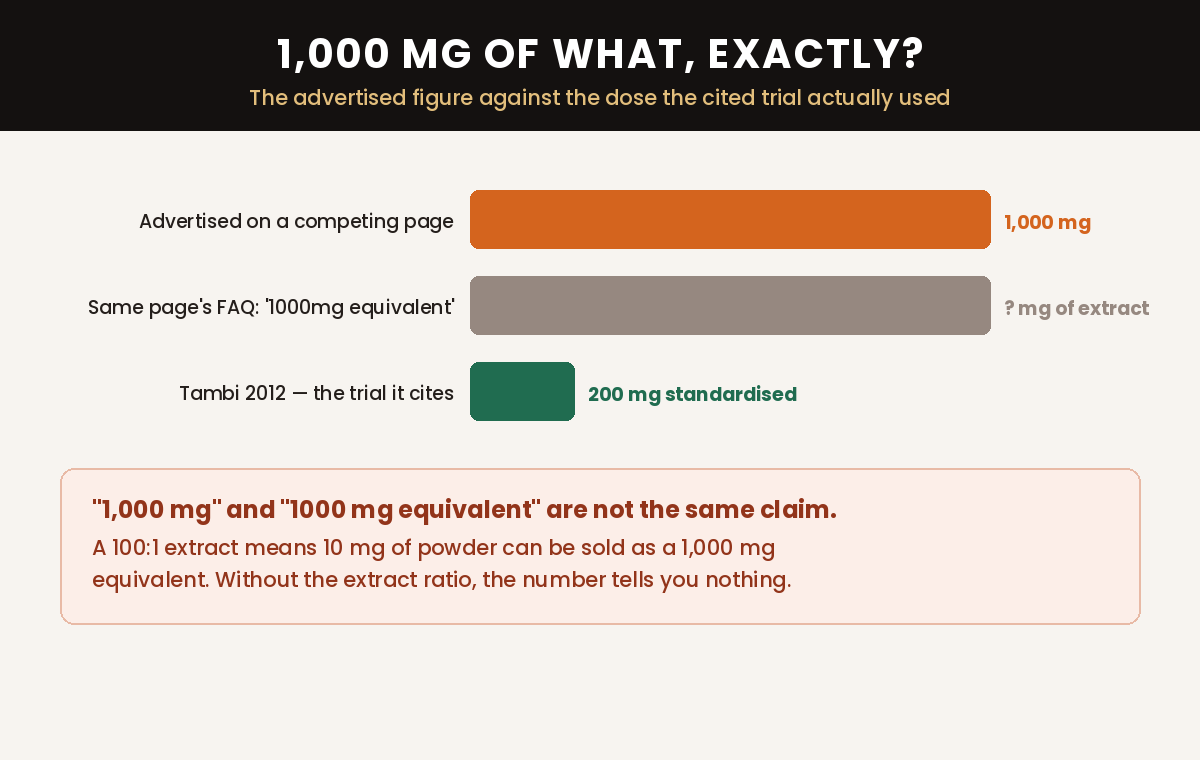
"What is the extract ratio on the Tongkat Ali?" One page says 1000mg in its ingredient list and 1000mg equivalent in its FAQ. At 100:1 those describe 10 mg of actual powder. The trial that same page cites used 200 mg of a standardised water-soluble extract.
Neither selling page publishes a Supplement Facts panel. Neither distinguishes nettle root from nettle leaf. Neither says whether the boron figure is chelate weight or elemental. And neither mentions nitrates.
| Does the page… | Page one | Page two | This page |
|---|---|---|---|
| Publishes a Supplement Facts panel | No | No | No |
| States the Tongkat Ali extract ratio | No | No | Yes |
| Compares advertised amounts against researched ones | No | No | Yes |
| Distinguishes nettle root from nettle leaf | No | No | Yes |
| Says whether boron is chelate or elemental | No | No | Yes |
| Warns about nitrates and PDE5 activity | No | No | Yes |
| Mentions the FDA tainted-products database | No | No | Yes |
| Avoids claiming FDA approval | No | Yes | Yes |
Names all seven botanicals and publishes no amounts for any of them, except a single "Tongkat Ali (1000mg equivalent)" buried in its FAQ. It runs an "FDA APPROVED" heading and badge, while its own footer states the information has not been evaluated by the FDA.
Its "Scientifically Formulated" certificate graphic is served from a filename belonging to a different supplement entirely, as is its customer-ratings image. Both are checkable in the page source.
Better written, cites PubMed, and publishes a full dose list. Three problems. The amounts total roughly 1,180 mg in a single capsule, which is at the very top of what any capsule physically holds. Five of the seven sit far below their researched intakes.
And its own reference list cites the LiverTox drug-induced liver injury monograph on Tongkat Ali as though it were supporting evidence for the ingredient.
Each claim is taken from the pages selling Horsewood and judged against the published research on the ingredient it rests on.
Supported — nothing on either page suggests otherwise. Both pages describe a single daily capsule with no stimulants, which suits the older buyer this product targets and avoids the crash-and-tolerance pattern of caffeine-led products.
Supported — the seven are named consistently. Tongkat Ali, horny goat weed, saw palmetto, nettle, wild yam, sarsaparilla and boron. Both pages agree on the list, which is more than they manage on anything else.
Partly supported — real research, ambiguous label. Naghii 2011 used 10 mg elemental boron daily and reported reduced SHBG and higher free testosterone. The advertised "20 mg boron chelate" does not say how much of that is elemental boron.
Partly supported — at a dose and form nobody specifies. The cited trial used 200 mg of a standardised water-soluble extract. The pages advertise 1,000 mg in one place and a "1000mg equivalent" in another, with no extract ratio given.
Partly supported — and it is the claim that needs a warning. Icariin from horny goat weed has weak PDE5 activity. That is a plausible mechanism and it is precisely why nitrate users need to ask a pharmacist — something neither selling page mentions.
Not supported — wrong amounts, and one is the wrong plant part. Saw palmetto research uses 320 mg standardised extract against an advertised 20 mg, and the prostate research on nettle is on the root, not the leaf both pages name.
Not supported — the underlying chemistry does not work that way. Diosgenin and sarsasapogenin can be converted to steroid hormones in a laboratory. Human metabolism does not perform that conversion, and there is no established dose for either.
Not supported — and not possible for any supplement. The FDA does not approve dietary supplements before sale. A page carrying an "FDA APPROVED" badge while its own footer says the statements have not been evaluated is contradicting itself on the same screen.
Horsewood is a once-daily male vitality capsule built around seven named botanicals. It suits an adult man who wants a stimulant-free botanical routine and accepts that no Supplement Facts panel is published. It does not suit anyone on nitrates or heart medication who has not spoken to a pharmacist, or anyone hoping it replaces a medical assessment.
It is worth being direct about what this category is. Male-enhancement supplements are sold on confidence and bought in private, which is exactly why they are the product type the FDA most often finds spiked with undeclared prescription drugs. That is not an accusation about Horsewood — it is the context any honest page about it has to provide.
It also matters that erectile difficulty is frequently an early sign of cardiovascular disease rather than a standalone problem. The arteries involved are narrower than the coronary arteries, so they narrow first. A man buying a capsule for it may be treating the symptom of something a blood pressure cuff would find in two minutes.
Full detail on what Horsewood is, or go straight to how Horsewood works.
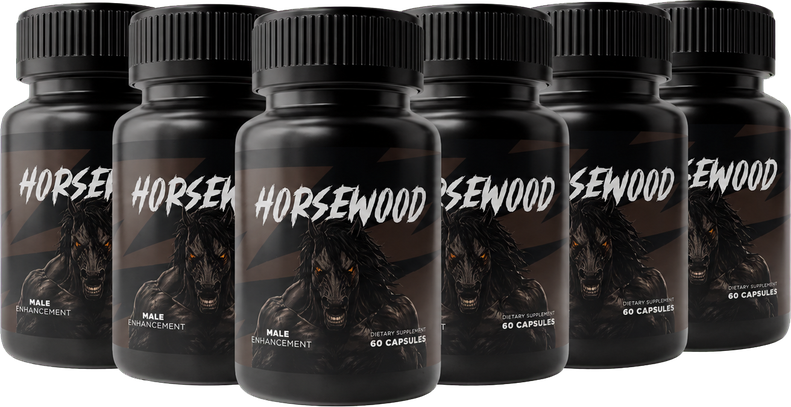
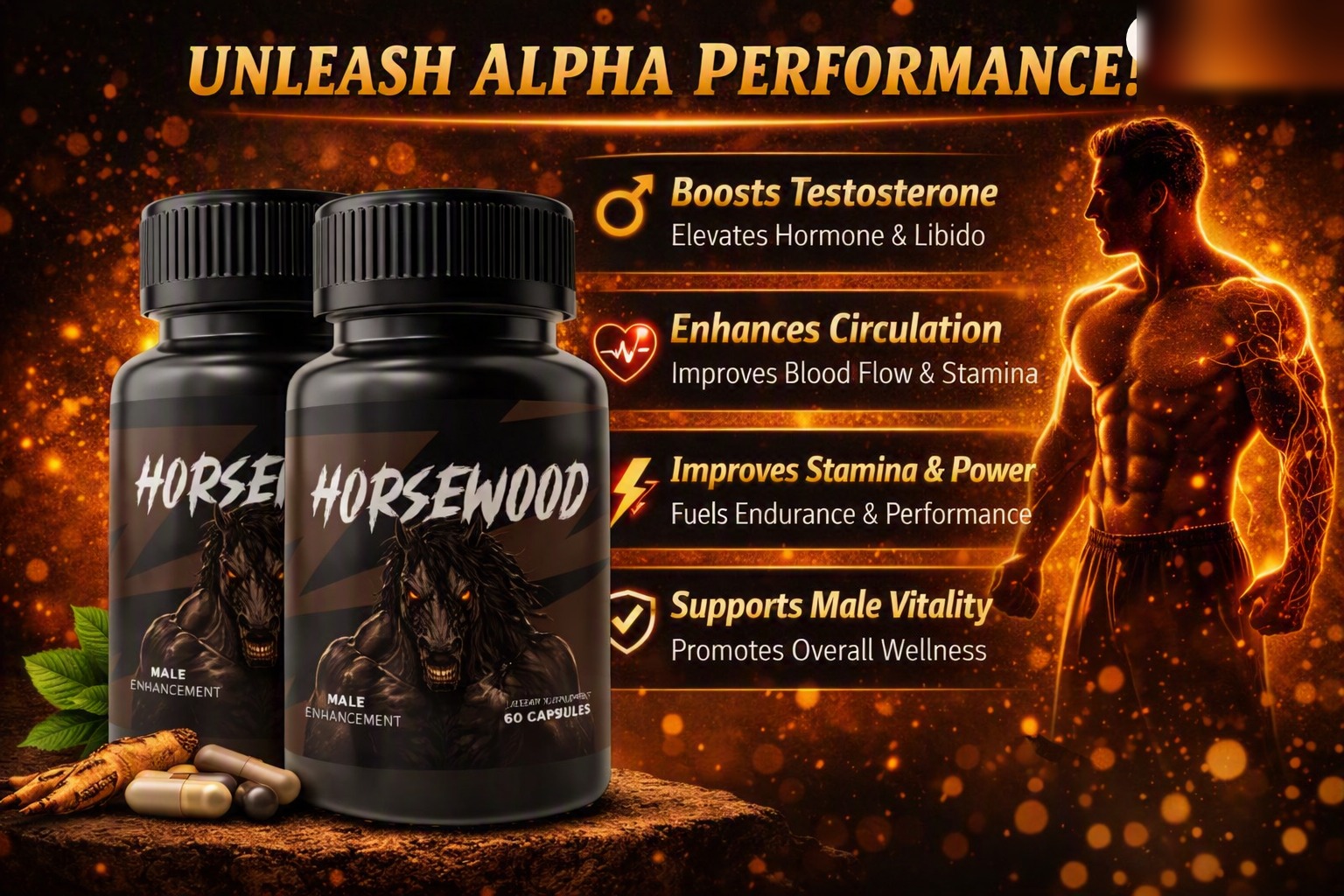
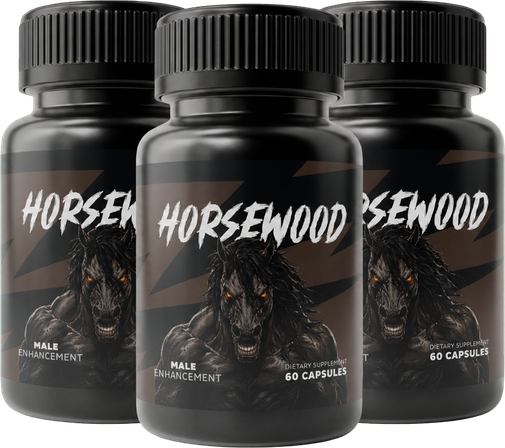
Supplied brand artwork, used as provided. Note that it reads 60 capsules while the brand's own vitality artwork reads 30, and that "Boosts Testosterone" is a stronger claim than a dietary supplement can make — both covered in the verdicts above.
Tongkat Ali anchors the testosterone claim, boron is studied for lowering SHBG and freeing up testosterone, and icariin from horny goat weed is a weak PDE5 inhibitor — the same enzyme prescription ED drugs target. The mechanisms are real. The amounts behind five of the seven are not.
Tongkat Ali, horny goat weed, saw palmetto, nettle, wild yam, sarsaparilla and boron chelate. No Supplement Facts panel is published, so the split comes from a competing page rather than from a label.
Its eurypeptides are the researched fraction, and the trial most often cited used 200 mg daily of a standardised water-soluble extract over a defined period.
Boron has been studied for reducing sex hormone binding globulin, which frees up more circulating testosterone. The study used 10 mg of elemental boron daily.
Horny goat weed's icariin is a weak PDE5 inhibitor. PDE5 inhibition relaxes smooth muscle and increases blood flow, which is the mechanism behind prescription ED drugs — and behind their nitrate warning.
Both are conventional inclusions in men's health products. Both are advertised at amounts far below the intakes their research used, and the nettle research is on a different plant part.
Wild yam and sarsaparilla are present on tradition rather than trials. The testosterone story requires an extract ratio nobody publishes. And no finished-product trial of Horsewood exists.
Named consistently across both pages. Quantified on only one of them, and verified on neither. Full research context on the Horsewood ingredients page.
1,000 mg advertised · no panel published
Is Horsewood's 1,000 mg of Tongkat Ali a real dose?
It depends entirely on what the 1,000 mg refers to, and the page advertising it uses two different phrasings. Its ingredient list says "Tongkat Ali 1000mg"; its own FAQ says "Tongkat Ali (1000mg equivalent)". Those are not the same claim.
80 mg advertised · no panel published
What does Horny Goat Weed actually do, and is 80 mg enough?
Its active compound icariin is a weak PDE5 inhibitor — the same enzyme family targeted by sildenafil. That is genuinely interesting and it is also the reason this ingredient needs a safety warning rather than a marketing paragraph. At 80 mg of unstandardised herb, the icariin content is unknown.
20 mg advertised · no panel published
Is 20 mg of saw palmetto a useful amount?
No. The saw palmetto research base — largely on prostate symptoms rather than performance — is built almost entirely on 320 mg daily of a standardised liposterolic extract. An advertised 20 mg is one sixteenth of that.
20 mg advertised · no panel published
Why does the nettle part matter?
Because the studies are on the root, and the pages advertise the leaf. Nettle root is what has been examined for prostate symptoms and SHBG binding, typically at 300 to 600 mg daily. Nettle leaf is a different plant part with a different composition and a different, mostly unrelated, evidence base.
20 mg advertised · no panel published
Does wild yam raise testosterone?
No. Wild yam contains diosgenin, which can be converted into steroid hormones in a laboratory but is not converted into testosterone or DHEA by the human body. That chemistry is the origin of a persistent marketing myth.
20 mg advertised · no panel published
What is sarsaparilla doing in a male formula?
Traditional use, essentially. Sarsaparilla contains plant sterols including sarsasapogenin, and the same misunderstanding that surrounds wild yam attaches to it — plant sterols are not anabolic steroids and the body does not convert them into testosterone.
20 mg advertised · no panel published
Is 20 mg of boron safe, and is it even 20 mg of boron?
Those are two separate questions and the label answers neither. "20 mg boron chelate" is the weight of the chelate compound, not of elemental boron, which would be a fraction of it. If it did mean 20 mg elemental, that sits exactly at the adult tolerable upper intake level.
Both pages say the full effect compounds over 90 days or more. Both offer a 60-day guarantee. Three bottles covers a fair assessment and ships free; six bottles is cheapest per bottle and outlasts your refund window by four months.
See Current Horsewood PricingOfficial website checkout · 60-day guarantee · confirm the terms before paying
Supported: a stimulant-free daily routine and seven openly named ingredients. Partly: boron for free testosterone, Tongkat Ali for testosterone support, and circulation via icariin — all at unverified amounts. Not supported: prostate claims, wild yam and sarsaparilla hormone claims, and FDA approval.
These are supportive wellness statements for healthy adult men, not promised outcomes. Each carries the same ruling used in the verdict matrix. More detail on the Horsewood benefits page.
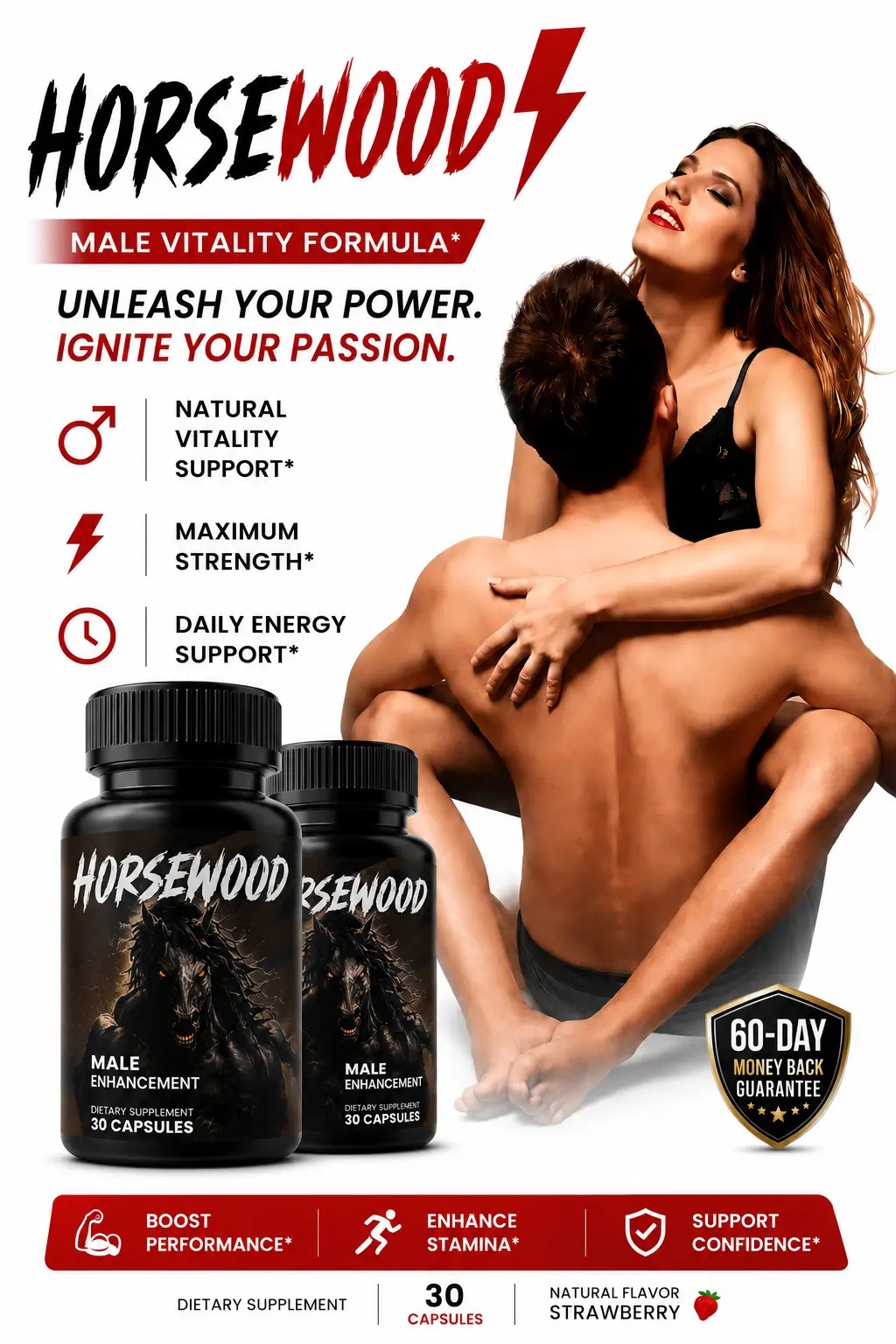
Supplied brand artwork, used as provided. It reads 30 capsules and names a strawberry flavour, while the bottle renders read 60 capsules — one of the seven conflicts documented above.
One capsule a day with no caffeine and no loading protocol. Easy to keep up, which matters more than most formulation details because adherence decides everything.
Both pages name all seven botanicals rather than hiding them in a proprietary blend. That is a genuine transparency point, even though no Supplement Facts panel is published anywhere.
Boron at a properly specified 10 mg elemental has a small but real study behind it. The advertised 20 mg chelate figure needs clarifying before you can judge it.
Real research exists at 200 mg of a standardised extract. Whether this product delivers anything comparable depends on an extract ratio nobody publishes.
Icariin has weak PDE5 activity, which is a plausible circulation mechanism and the reason this ingredient needs a nitrate warning rather than a marketing paragraph.
Saw palmetto is advertised at one sixteenth of its studied amount, and the prostate evidence for nettle concerns the root rather than the leaf named on both pages.
The plant sterols in both are not converted into human hormones. This is a long-running marketing myth rather than a mechanism.
Never. Erectile difficulty is an early marker of cardiovascular disease, and self-treating it with a supplement can delay a diagnosis that matters a great deal more.
Nitrates for angina plus a PDE5 inhibitor can drop blood pressure dangerously. Icariin has weak PDE5 activity, and this product category is the one most often found to contain undeclared PDE5 drugs. Ask a pharmacist before your first capsule.
Most of these are questions for the seller, and the answers are worth more than any review — including this one.
This is the most important line on the site. Nitrates, blood pressure medication and blood thinners all interact with what this category contains or, in the case of adulterated products, may secretly contain. The check takes minutes.
No panel is published on either page selling this product. A seller who cannot show you the label is asking you to take the ingredient list on trust.
"1,000 mg" and "1000 mg equivalent" appear on the same competing page. If it is a 100:1 extract, the actual powder is 10 mg. That single question is worth more than any review.
Twenty milligrams of elemental boron sits exactly at the adult upper limit. Twenty milligrams of chelate is a much smaller amount of boron. These are very different products.
One page advertises 30 capsules; the brand's own bottle renders say 60 and its vitality artwork says 30. Count what you receive and work out your actual cost per day.
Products in this category are the single most common target of undeclared prescription ingredients. Taking two at once multiplies an unknown by an unknown.
Priapism is a medical emergency and a recognised red flag for adulterated products. More than four hours means the emergency department, not the seller's support email.
Both pages state a 60-day money-back guarantee. A fair assessment runs 8 to 12 weeks, and 12 weeks is 84 days. Decide before the window shuts.
Advertised at $49 a bottle on one page and $89 on the other, both against a $149 reference. Three bottles at $59 each ($177) and six at $49 each ($294) with free US shipping and three digital bonuses. Confirm the live total at checkout.

Both pages price against a $149-a-bottle reference figure. We found no evidence Horsewood has sold at $149 a bottle, so treat it as promotional framing rather than money saved. The two pages also disagree on the single-bottle price — $49 on one, $89 on the other — which is worth confirming at checkout before you pay.
Sixty days from purchase, empty bottles accepted, on both pages. The catch is that both pages also say the full effect takes 90 days or more — so the refund window closes before the timeline they themselves advertise.
Both pages describe a 60-day money-back guarantee with empty bottles accepted, which is a genuinely generous policy as written. Both also state that the full effect compounds over 90 days or more, and one pushes the six-bottle pack precisely on that basis.
Those two statements do not fit together. If the product needs 90 days to show what it does, a 60-day window closes a month early. Screenshot the guarantee text on the order form with the date visible and set a reminder for day 50.
Check the Guarantee Terms
Badges describe manufacturing procedures and a stated policy. They are not evidence a formula works, and they say nothing about amounts. No dietary supplement is FDA-approved — an "FDA Approved" seal was supplied with this product's artwork and has not been used here, because the claim cannot be accurate. "Third-party tested" is claimed on one page with no certificate a buyer can look up.
Self-reported energy and confidence are among the least reliable measures there are, and expectation does a great deal of work in this category. Our own assessment is on the Horsewood review page.
"Energy was better by week four, though I also started walking every morning around the same time. No side effects at all."

"I asked support for the label before ordering and never got one. Ordered anyway. Still have not seen a Supplement Facts panel on the bottle I received."

"My GP told me to get my blood pressure checked before taking anything like this. Turned out that was the actual problem. Glad I asked first."
The named botanicals are conventional and mostly well tolerated. Three things deserve real attention: this category is the one the FDA most often finds adulterated with undeclared prescription drugs; anything with PDE5 activity interacts dangerously with nitrates; and Tongkat Ali has a LiverTox entry for drug-induced liver injury.
The FDA maintains a public database of tainted sexual-enhancement products, and it runs to hundreds of entries. The most common finding is undeclared sildenafil or tadalafil — the active ingredients in prescription ED drugs — or unapproved analogues of them. We have no evidence that Horsewood is among them. We are telling you the category risk because neither page selling it does.
Sildenafil and tadalafil are prescription-only for a reason: combined with nitrates they can cause a catastrophic drop in blood pressure. A man taking nitrates for angina who buys a "natural" product does not know he needs to avoid it. That is the exact scenario the FDA database exists to prevent.
Icariin has weak PDE5 activity in its own right, which makes the nitrate conversation relevant even without adulteration. Boron and several botanicals can also interact with anticoagulants. Neither page selling this product mentions nitrates anywhere.
Tongkat Ali has an entry in LiverTox, the NIH's drug-induced liver injury database. One competing page cites that very monograph in its reference list as though it supported the ingredient. Stop and see a doctor if you develop jaundice, dark urine, pale stools or right-sided abdominal pain.
The arteries supplying the penis are narrower than the coronary arteries, so endothelial disease frequently shows up there first — often years before a cardiac event. New or worsening erectile difficulty deserves a blood pressure check, a cholesterol panel and a glucose test far more than it deserves a capsule.
An erection lasting more than four hours can cause permanent damage. Chest pain, fainting or sudden vision or hearing change after taking any product in this category means emergency care, and take the bottle with you.
Short, specific answers to what buyers search before ordering from the Horsewood official website. Every one traceable to a published page, a study, or a stated policy.
Check Price & AvailabilityHorsewood is a once-daily male vitality capsule sold as a "Male Enhancement" or "Male Vitality Formula", built around seven named botanicals: Tongkat Ali, horny goat weed, saw palmetto, nettle, wild yam, sarsaparilla and boron chelate. Bottle renders in the official asset pack read 60 capsules; one competing page advertises a 30-capsule bottle.
The seven botanicals are named consistently. The amounts are a different matter: one page publishes none, and the other publishes Tongkat Ali 1,000 mg, horny goat weed 80 mg, and saw palmetto, wild yam, sarsaparilla, nettle and boron chelate at 20 mg each. No Supplement Facts panel is published anywhere to verify that list against.
Not that we could find. Neither competing page shows one, and the official asset pack contains bottle renders and marketing artwork but no label panel. That is the single biggest gap in this product's public information, and it is the reason this site compares advertised amounts against researched ones rather than treating either as confirmed.
It depends what it is 1,000 mg of, and the page advertising it says both "1000mg" and "1000mg equivalent" in different places. A 100:1 extract means 10 mg of powder can be described as a 1,000 mg equivalent. The trial that page cites used 200 mg of a standardised water-soluble extract. Ask for the ratio before you judge the number.
No finished-product trial of Horsewood exists. Two of its ingredients have research behind them at specified doses — Tongkat Ali as a standardised extract, and boron at 10 mg elemental — but whether this product delivers comparable amounts cannot be determined from anything published. If testosterone is your concern, a blood test is the answer.
The named botanicals are conventional and mostly well tolerated. Two things deserve real attention: Tongkat Ali has a LiverTox entry for drug-induced liver injury, and this whole product category is the one most frequently found by the FDA to contain undeclared prescription drugs. If you take nitrates, blood pressure medication or blood thinners, speak to a pharmacist first.
Ask a pharmacist before you do. Icariin from horny goat weed has weak PDE5 activity, which is the same mechanism as prescription ED drugs, and the combination of PDE5 inhibition with nitrates can drop blood pressure dangerously. Neither page selling this product mentions nitrates at all.
Advertised pricing conflicts between the two pages: one shows $49 a bottle and the other $89 for a single bottle, both against a $149 reference figure. Three bottles is shown at $59 each ($177) and six at $49 each ($294) with free US shipping and three digital bonuses. Confirm the live total at checkout.
Both pages state a 60-day money-back guarantee with empty bottles accepted. Note the mismatch: both also say the full effect compounds over 90 or more days, so the guarantee closes roughly a month before the timeline they themselves describe. Diarise day 50.
No, and neither is any other dietary supplement — the FDA does not approve supplements before sale. One competing page displays an "FDA APPROVED" badge and heading while its own footer states that the information has not been evaluated by the FDA. Both statements cannot be true.
The answer depends which asset you look at, which is itself the finding. The bottle renders read 60 CAPSULES. The brand's own male-vitality artwork reads 30 CAPSULES. One competing page sells a 30-capsule, 30-day bottle. Count what arrives and recalculate your cost per day.
Both pages offer three digital bonuses with the six-bottle pack, and the two sets are completely different. One offers The 7-Day Vitality Reset, The Stallion Kitchen and The Confidence Code; the other offers three brain-themed guides. Confirm what you will actually receive before ordering.
We have no evidence of that, and it would be unfair to say so. It is a real product sold through a real checkout with a stated guarantee. The fair criticisms are that no Supplement Facts panel is published, that the two official-looking pages contradict each other on seven checkable points, and that five of the seven botanicals are advertised at amounts far below their researched intakes.
Both pages say 90 days or more for the full effect. That is a reasonable timeline for a botanical product and it sits awkwardly beside a 60-day guarantee. If you trial it, keep a simple written record and decide at day 50.
Through the Horsewood official website checkout, which is what attaches current pricing, the stated guarantee and a working refund route to your order. Given that two different pages present themselves as official with different prices and different bonuses, screenshot whichever terms you are agreeing to.
Most daily testosterone release happens during sleep, and restricting sleep to five hours has been shown to lower daytime testosterone
A quality claim with no verifiable document, and a certificate graphic borrowed from another product.
Population studies have reported a gradual decline in average male testosterone over recent decades, alongside the well-established ind
The right audience for the pitch, and the wrong audience for a page with no safety section.
Judge any review by whether it contains one number the seller would not have published itself.
Testosterone is measured from a morning blood sample, ideally between 7 and 10 am, and an abnormal result should be repeated before any
You now have the seven conflicts between the two selling pages, the advertised amounts set against their researched intakes, the extract-ratio question that decides what "1,000 mg" means, the nitrate warning neither page gives, and the guarantee that closes before their own timeline finishes. That is more than any other Horsewood page will give you.
If a stimulant-free botanical routine is what you want — after a pharmacist has seen your medication list, and alongside a blood pressure check rather than instead of one — three bottles is the sensible starting point. From $49 per bottle · free US shipping on 3 and 6 · 60-day money-back guarantee.
Claim Your Horsewood Discount